Lucy Fly–Noah Fly Sister–Brother Relationship
The Earthquake BirdThe Lucy Fly–Noah Fly Sister–Brother Relationship begins in a household where the older boys receive little correction for their cruelty and Lucy receives little protection. Noah, the nastiest of her seven older brothers, leads the assault that ends with his death after Lucy jumps from an apple tree onto him. The relationship’s decisive consequence is not reconciliation or relief but Lucy’s retreat: she had meant to squash Noah, not puncture him, and thereafter kept herself to herself.
Family hierarchy and everyday hostility
Lucy’s brothers hardly spoke to her, in part because Miriam did not like them giving attention to a small girl rather than to their mother. Miriam regarded her seven sons as angels, but the account sharply contrasts that ideal with their behavior: they threw water bombs from behind doors, emptied them into neighborhood children’s eyes, and used bathroom towels when toilet paper was inconvenient. The brothers’ conduct places Lucy on the exposed edge of the family, with neither their attention nor the parental protection that might have made their attention safer.
Noah’s death did not simply end this imbalance. Miriam continued to refer to her seven sons when only six remained, making it difficult for Lucy to regard his death as an achievement that had freed her from her worst tormentor. Lucy is said to have had some claim in bringing it about, but the circumstances show an act of immediate self-preservation rather than a planned killing: Noah and his brothers had surrounded the tree, and Noah was raising a particularly dangerous stone toward her.
The apple-tree confrontation
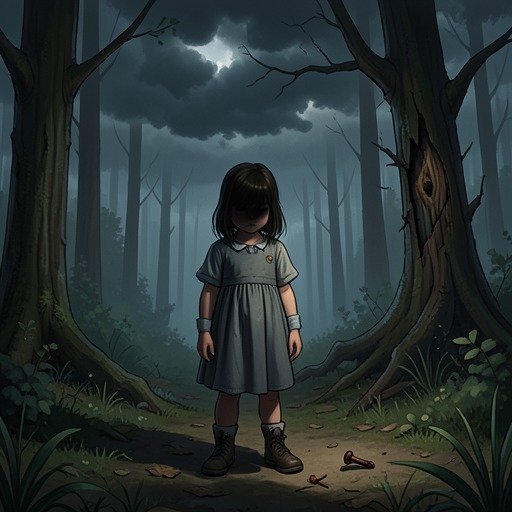
When Lucy was seven or eight, the apple tree in the garden was a refuge as well as a place for daring play. She climbed its broad trunk and leapt from a long branch, sometimes making the jump more difficult by placing tools or sharp planks in the grass. When she did not want to jump, she sat among the branches at an observation point where she could watch the ground while being less easily watched herself. On the day of the confrontation, she was reading Pollyanna, a book she disliked, and shaking the tree to dislodge apples.
The seven brothers returned from a fishing trip with the Boy Scouts and spotted Lucy above them. At Noah’s command, they surrounded the tree and threw stones to knock her down. Lucy understood that jumping could put her within their reach, while staying aloft left her exposed to the stones. She saw a heavier, sharply angled stone on the grass; Noah seized it and looked up at her as he prepared to throw. Lucy pulled back along the branch and pushed down with all her might, springing from the tree onto him.
The landing turned the makeshift obstacles from Lucy’s play into part of the fatal event. Noah fell onto one of her planks, where a long rusty nail pierced him between the shoulder blades. He sat up with the plank attached to his back, then fell again and let the stone slip from his hand. His eyes remained open, staring at Lucy; he died in hospital that night. The sequence links the brothers’ attack, Noah’s raised weapon, Lucy’s leap, and the hidden danger in the grass without suggesting that Lucy intended the injury’s lethal result.
Death and its aftermath
The narration declines to recount the devastation Noah’s death caused his parents, but records that Lucy did not bother anyone in the family afterward and kept to herself. She had intended to squash Noah, not puncture him. This distinction matters to the relationship’s aftermath: the outcome is irrevocable, while Lucy’s stated intention was to stop the attack, not to cause a fatal wound.
George chopped down the cooking apple tree against the town council’s wishes, cut it into pieces, and burned it in a bonfire. The tree that had served Lucy as a climbing place and a sheltered vantage point was destroyed after it became inseparable from Noah’s death. Whether George’s eyes filled with tears in the smoke is left unknown; Lucy was not watching. The family’s response therefore remains partly beyond her view, as the relationship itself had largely existed without close or caring communication.
Silence and the altered sibling bond
The brothers’ appetite for Lucy’s blood ended after the accident, and at school other children kept their distance because they knew she could kill so easily. At home, the family either did not notice her silence or was relieved by it. The account says that Lucy did not speak for the next three years; her last words were spoken to a nurse who held her hand while leading her from the hospital ward. Asked whether she understood that Noah’s death was not her fault, Lucy answered, “Yes, no, yes,” because she did not understand the question or know which answer the nurse wanted. She could not utter another word after that.
The relationship thus changes from a pattern of sibling neglect and physical intimidation into a bond marked by an accidental death that Lucy cannot explain away and a family silence that does not resolve it. Noah’s death stops the brothers’ attacks, but it does not restore Lucy’s place among them. Instead, the episode joins the loss of her brother to the beginning of her prolonged silence, while Miriam’s continued count of seven sons preserves the family’s own version of the loss.